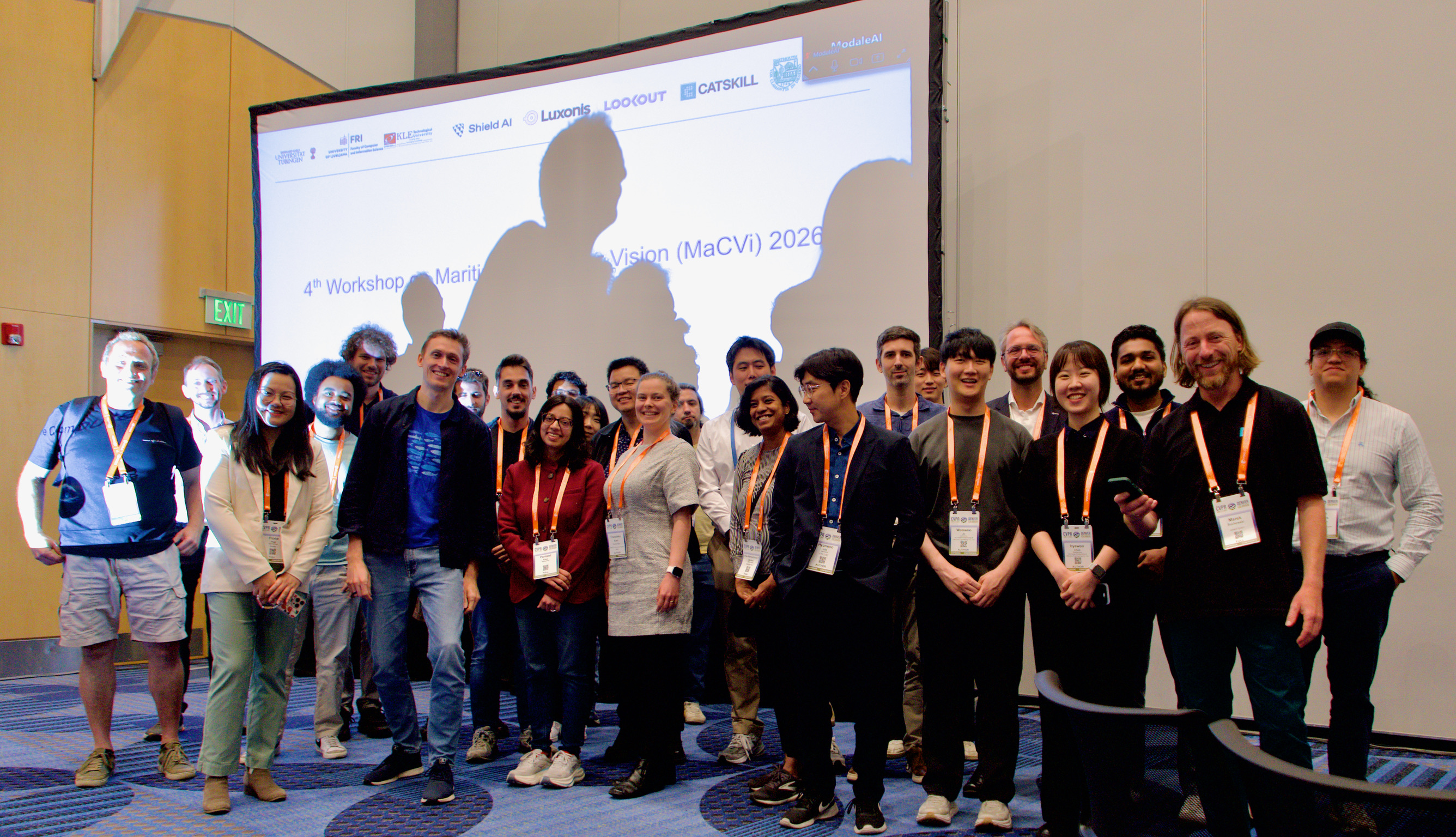
MaCVi @ CVPR 2026 included keynote talks, accepted paper and challenge discussions, and presentations around maritime computer vision, datasets, benchmarks, and deployable perception systems.
Find a short summary and workshop material below. Additional material will be added as it becomes available.
MaCVi @ CVPR 2026, Denver.
Workshop Slides
The workshop overview slides are available as Google Slides. Fiona Hua and Parneet Kaur's keynote slides are available here.
We had keynote talks spanning maritime autonomy, AIS reliability, scalable AV deployment lessons, and operational perspectives. Speaker information and abstracts are available on the keynotes page, and organizer information is available on the people page.
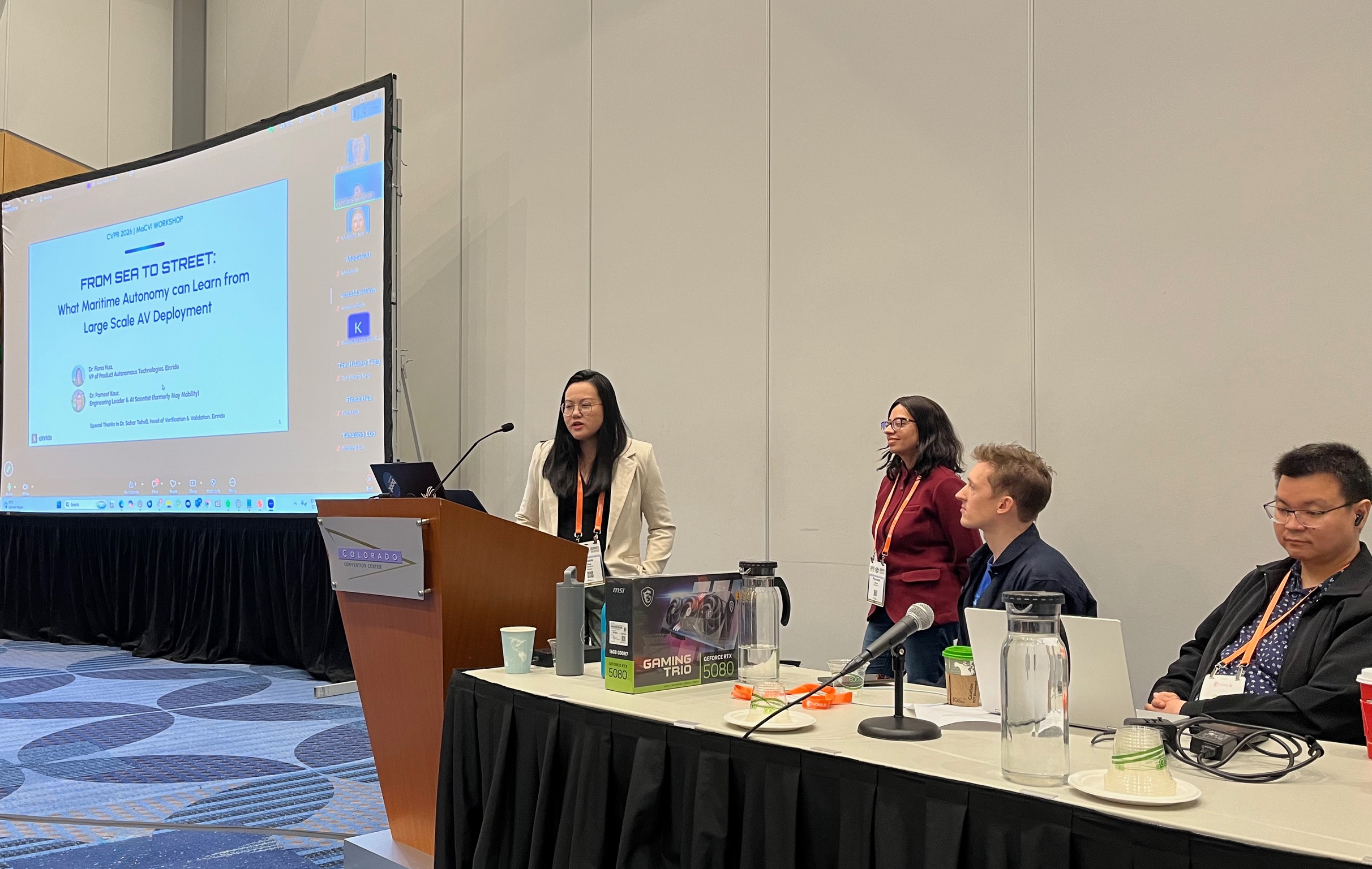
Fiona Hua and Parneet Kaur gave the keynote on what maritime autonomy can learn from large-scale autonomous vehicle deployment.
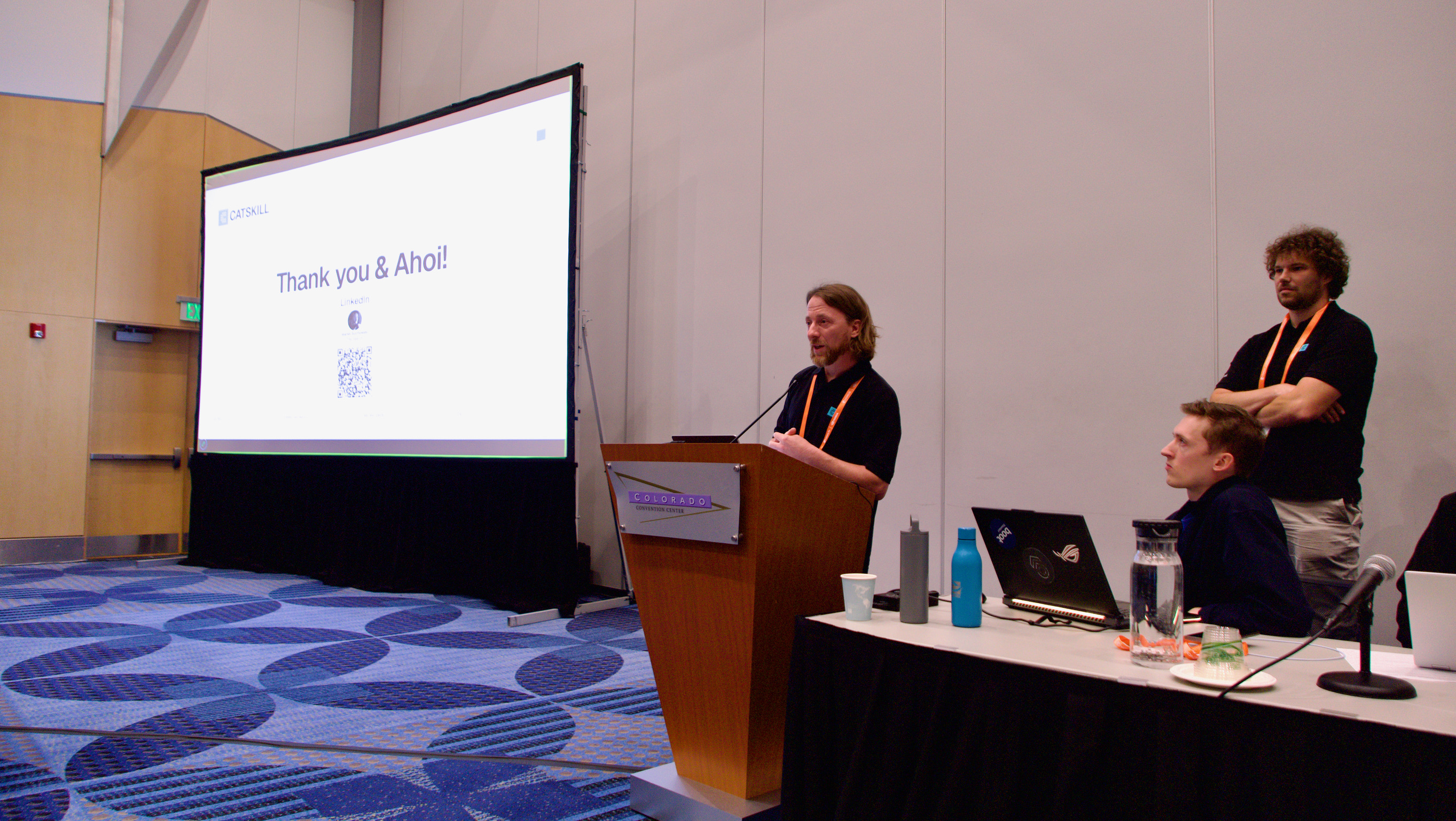
Marek Suchowski, catskill GmbH, gave the keynote on AIS coverage gaps, spoofing, and implications for computer vision models.
Challenge Winners
The workshop featured several benchmark challenges. We congratulate all winning teams and thank the sponsors for supporting the challenge program.
Vision-to-Chart Data Association: winning teams from HD Korea Shipbuilding & Offshore Engineering Co., Ltd.; Arquimea Research Center; and Xidian University.
Thermal Object Detection: winning teams from Schneider Electric Taiwan Co., Ltd.; University of Taipei / NYCU / University at Albany / SUNY; and HD Korea Shipbuilding & Offshore Engineering Co., Ltd.
LaRS Panoptic Segmentation: winning teams from University of Zagreb FER; Fraunhofer IOSB / Karlsruhe Institute of Technology; and HD Korea Shipbuilding & Offshore Engineering Co., Ltd.
LaRS Embedded Obstacle Segmentation: winning teams included Yuan Feng, Jose Mateus Raitz Persch and Rahul Harsha Cheppally, and Justin Davis and Mehmet E. Belviranli.
Multimodal Semantic Segmentation: winning teams from GIST AI Lab; Xidian University; and Fraunhofer IOSB / Karlsruhe Institute of Technology.
Catskill sponsored a GPU for the best Thermal Object Detection team, and Luxonis sponsored a $500 store voucher for the best Embedded Obstacle Segmentation team. We also thank LOOKOUT, Catskill, and Luxonis for supporting MaCVi. More maritime autonomy and perception companies are listed on the industry page.
Next Steps
We will continue updating MaCVi datasets, benchmarks, and workshop material. If you want to contribute data, participate in future challenges, or collaborate on maritime perception and autonomy, please contact the organizers or follow the MaCVi pages for the next iteration.